

No, it is not recommended to put thermal paste on top of thermal pads.
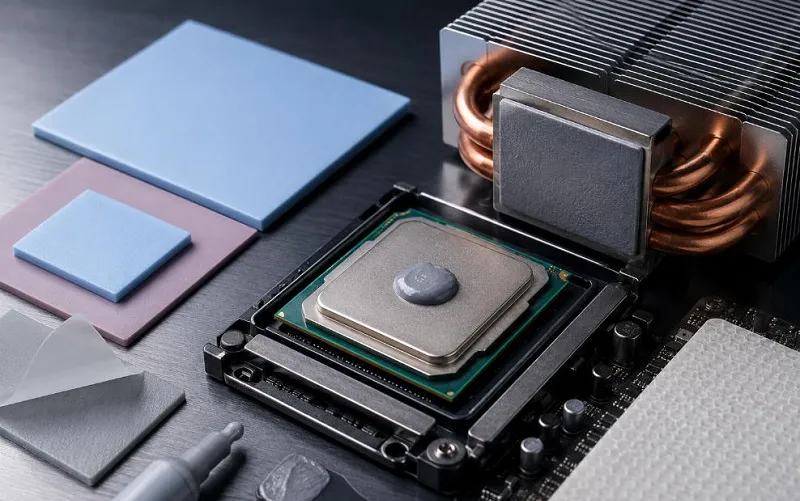
Thermal paste should only be used when there is a gap between the heat sink and the component. If you use thermal paste on top of a thermal pad, it will fill in the pores of the pad and reduce its ability to dissipate heat.
Both components fulfill a different purpose and are not complementary. It is best to use them separately to get the most effective cooling for your system.
Use a thermal paste if there is no gap between the component and heatsink. The thermal paste is applied on the surface of the component where it touches the heat sink .
Using a program like HWInfo lets you monitor temperatures. Thermal pads may be harmful if your GPU memory temperatures are unusually high when running a benchmark or stress test, even at max fan speed.
Changing thermal pads is not recommended unless you notice high memory temperatures or frequent crashes. As the thickness of these pads varies by small amounts, replacing them with new ones of the wrong size and thickness can worsen it. However, those running GPUs 24x7 in dusty environments need to replace thermal pads periodically to reduce the chances of failure.
Stacking is ok, but will reduce thermal pad performance. Also on GPUs you will want the correct thickness. Having uneven/wrong pad sizes can cause the heatsink to not seat correctly and you can get higher temps than stock.
While a thermal pads is not as compressible as a thermal paste, the range of available materials means thermal pads are extremely effective with any substrate. Additionally, thermal pads maintain their initial performance over the long-term since they are not subject to the same types of degradation as thermal grease.
Ideally, you should use the thinnest thermal pad that you can with the device. Start with a 2mm thermal pad, and if it has an indentation from the heatsink go down a size of thickness. The material that you use also matters, as some materials dissipate heat better than others.
Although the thermal conductivity belongs to the physical properties of the silicone gasket, it only depends on the material of the silicone gasket itself, and will not be affected by the thickness, current situation, etc.
However, the thermal resistance becomes larger with the increase of the thickness, and finally directly affects the heat conduction effect.
Therefore, considering only the heat conduction effect, in the case of the same thermal conductivity, it is actually better to be thinner.
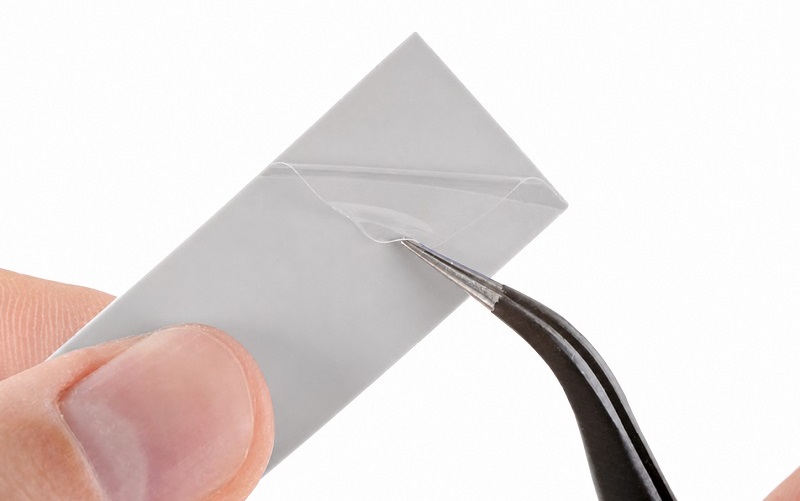
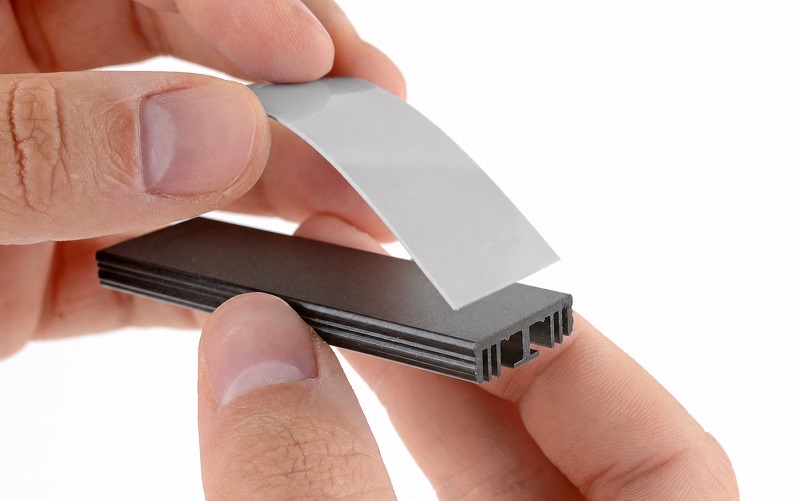
Thermal pads are heat-conducting media that fill the air gap between heating components of electronic products and heat sinks or metal casings. The flexible and elastic characteristics of thermal pads allow them to be used to cover very uneven surfaces. Heat is conducted from the entire PCB to the metal housing or diffuser, which improves the efficiency and lifespan of heat-generating electronic components.
Under normal circumstances, solid-state hard drives do not need to be pasted with thermal pads, because although the hard drive will generate heat when it is working, its heat is negligible compared with the CPU of the graphics card.
Please contact to [email protected] for your request. Thermal interface material sample will take a 5 to 10 business days for shipping.
Before you make an order, please let us know the type of thermal interface material, application purpose, specs or any other information you have. Our specialist will suggest you what product is appropriate.




 +86 755 2976 5899

 English