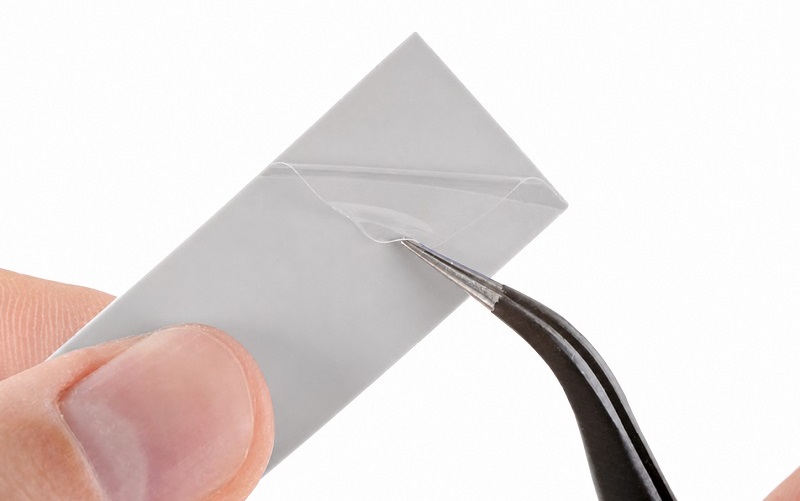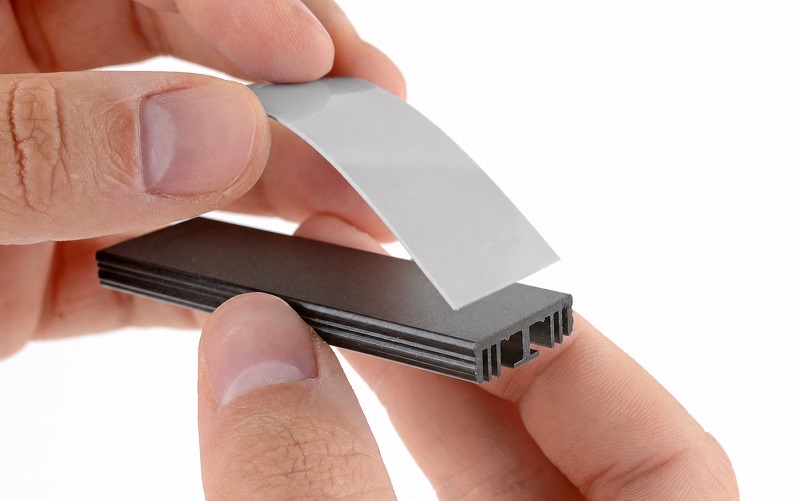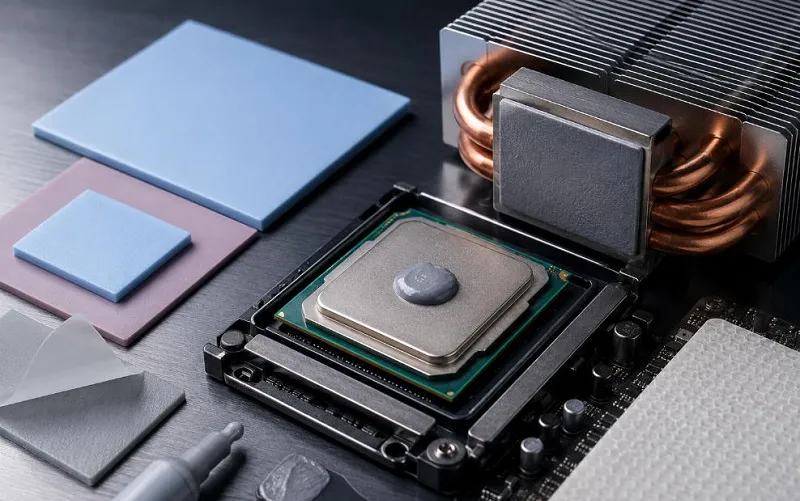
AOK liquid gap fillers are dispensable thermal interface materials for filling gaps between heat-generating components and heat sinks or housings. The range includes one-part thermal putties and two-part curable gap fillers, with options for different gap geometries and dispensing processes. Select the grade according to thermal performance, electrical insulation, dispensing and curing requirements.


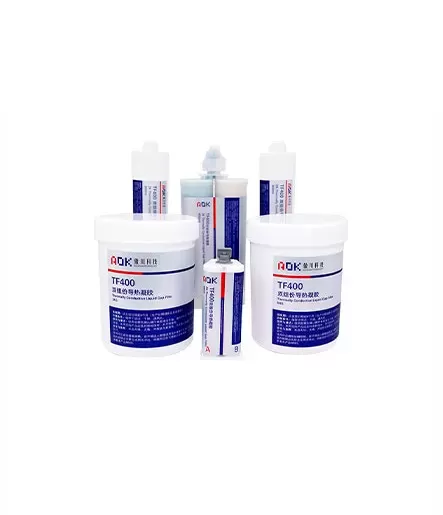
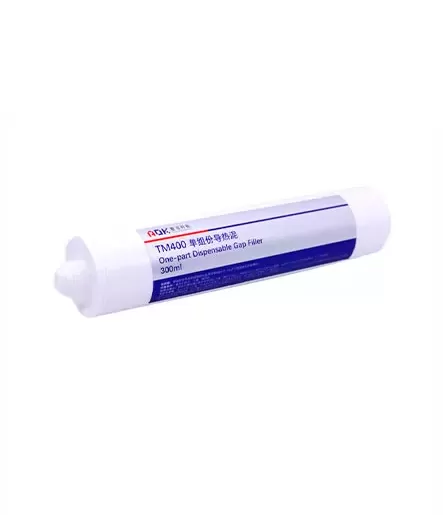
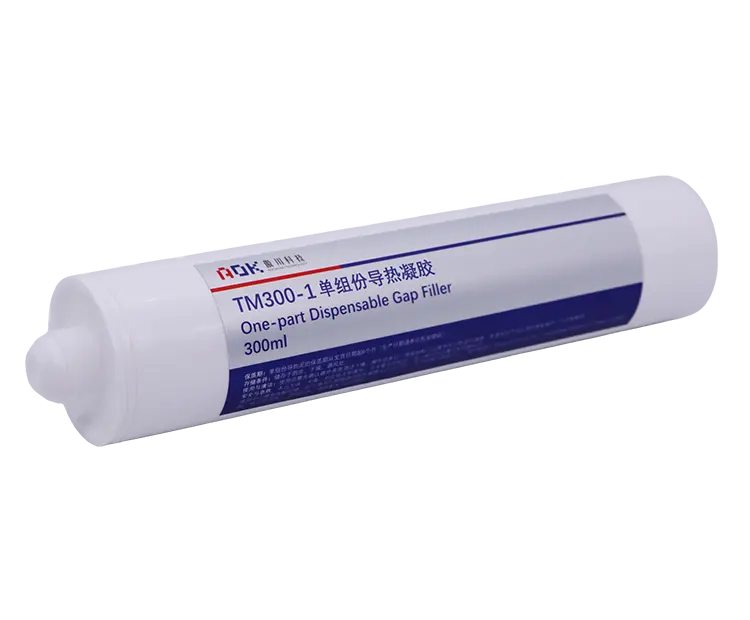
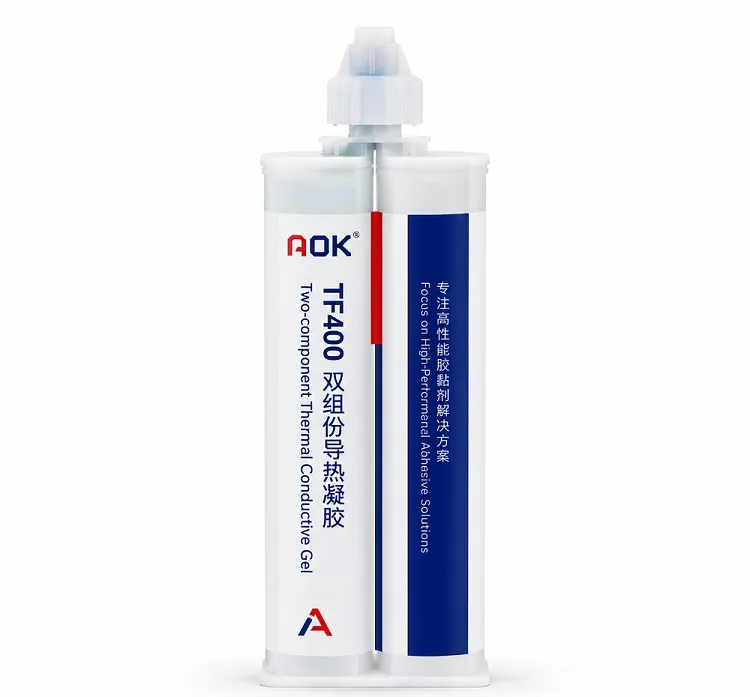
Both materials fill uneven gaps between heat-generating components and cooling surfaces. The main differences are dispensing and mixing requirements, as well as the material's final state. One-part cure behavior varies by grade.
| Factor | One-Part Thermal Putty | Two-Part Liquid Gap Filler |
| Processing | Ready to dispense without A/B mixing | Requires controlled A/B mixing. Confirm the specified ratio and whether it is by weight or volume for the selected grade. |
| After dispensing | Cure behavior and final state vary by grade | Cures to form a soft, stable thermal interface |
| Typical priority | Simpler dispensing and easier process setup | A cured thermal interface; verify material retention under vibration and thermal cycling. |
| Check before selection | Extrusion rate, slump, temperature range and rework | Working time, mixing accuracy, cure schedule and reliability |
Liquid gap fillers are used where components have different heights, surfaces are uneven, or a pre-cut pad is difficult to place consistently. Typical applications include:
• EV battery modules and cold plates — large contact areas, variable gaps, and vibration exposure.
• ADAS modules and electronic control units — complex surface geometry and low allowable assembly stress.
• Power converters, inverters, and power supplies — heat transfer from devices to a housing or heat sink.
• Telecom and network equipment — repeatable dispensing across high-volume assemblies.
• Storage modules and compact electronics — multiple component heights in limited space.
Material selection still requires application-level thermal and reliability testing.
Different thermal interface materials suit different gap sizes, assembly methods and service conditions.
One-part thermal putties are included in AOK's liquid gap filler range and are compared with two-part curable grades in the preceding section.
| Material | Best Suited For | Key Consideration |
| Liquid Gap Filler | Variable gaps, uneven surfaces and automated dispensing | Confirm one- or two-part processing, slump, bond-line thickness and cure requirements |
| Thermal Pad | Clean assembly and relatively consistent gaps | Select the correct thickness, hardness and compression force |
| Thermal Grease | Thin bond lines under continuous contact pressure | Evaluate pump-out, application thickness and long-term stability |
| Phase Change Material | Thin interfaces that require controlled material flow at operating temperature | Confirm activation temperature and assembly pressure |
| Potting Compound | Encapsulation, environmental protection and heat transfer around components | Rework is more difficult, and the material serves a different function from a component-to-heatsink gap filler |
Liquid gap fillers can be considered for assemblies with different component heights, complex surfaces or low allowable compression force. Final selection should be based on gap geometry, thermal resistance, dispensing and assembly conditions, and reliability requirements.




 +86 755 2976 5899

 English