Shenzhen AOCHUAN Technology CO., LTD.
Email Us

Blog

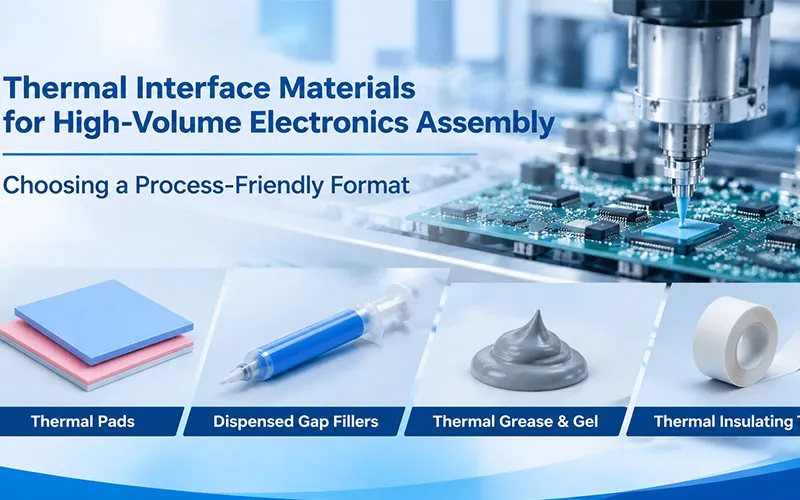
Thermal Interface Materials for High-Volume Electronics Assembly: Choosing a Process-Friendly Format
Oct 28, 2026
Thermal Interface Materials for High-Volume Electronics Assembly: Choosing a Process-Friendly Format
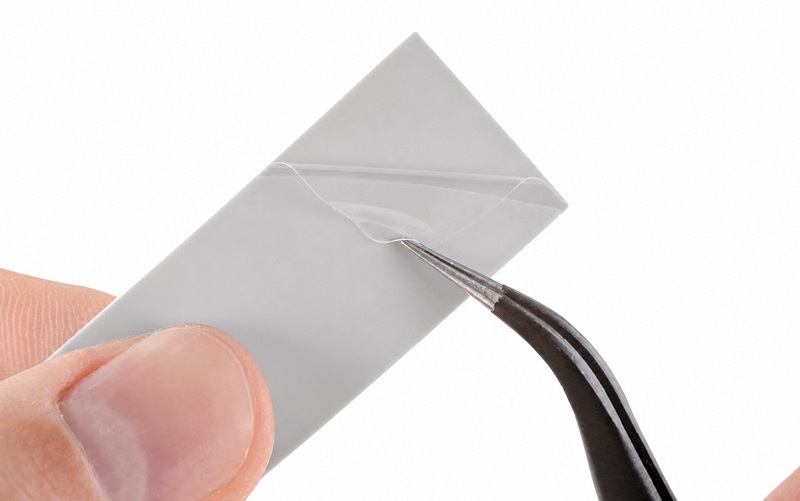
Thermal interface material format affects assembly flow as well as heat transfer. It determines how the material is placed, inspected, compressed, cured, and reworked. Select a format that fits the ga...
How to Choose a Thermal Pad for a Heat Sink: 6 Engineering Factors
Oct 26, 2026
How to Choose a Thermal Pad for a Heat Sink: 6 Engineering Factors
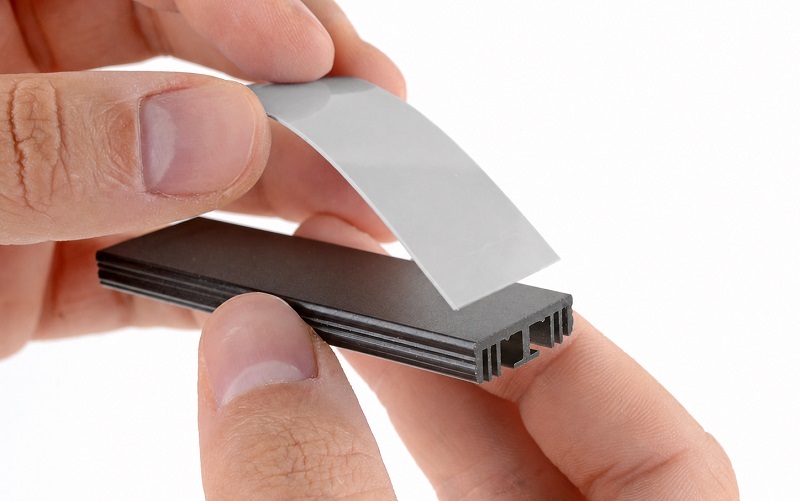
Choose a thermal pad for a heat sink by the installed gap, heat load, mounting force, electrical needs, and operating environment. Conductivity helps screen materials; it does not predict finished ass...
Thermal Interface Materials for Fragile Electronics: Managing Assembly Tolerances
Oct 21, 2026
Thermal Interface Materials for Fragile Electronics: Managing Assembly Tolerances
For fragile packages and board-mounted components, thermal-interface selection is also a mechanical protection task. The material must maintain a heat path across production tolerances without loading...
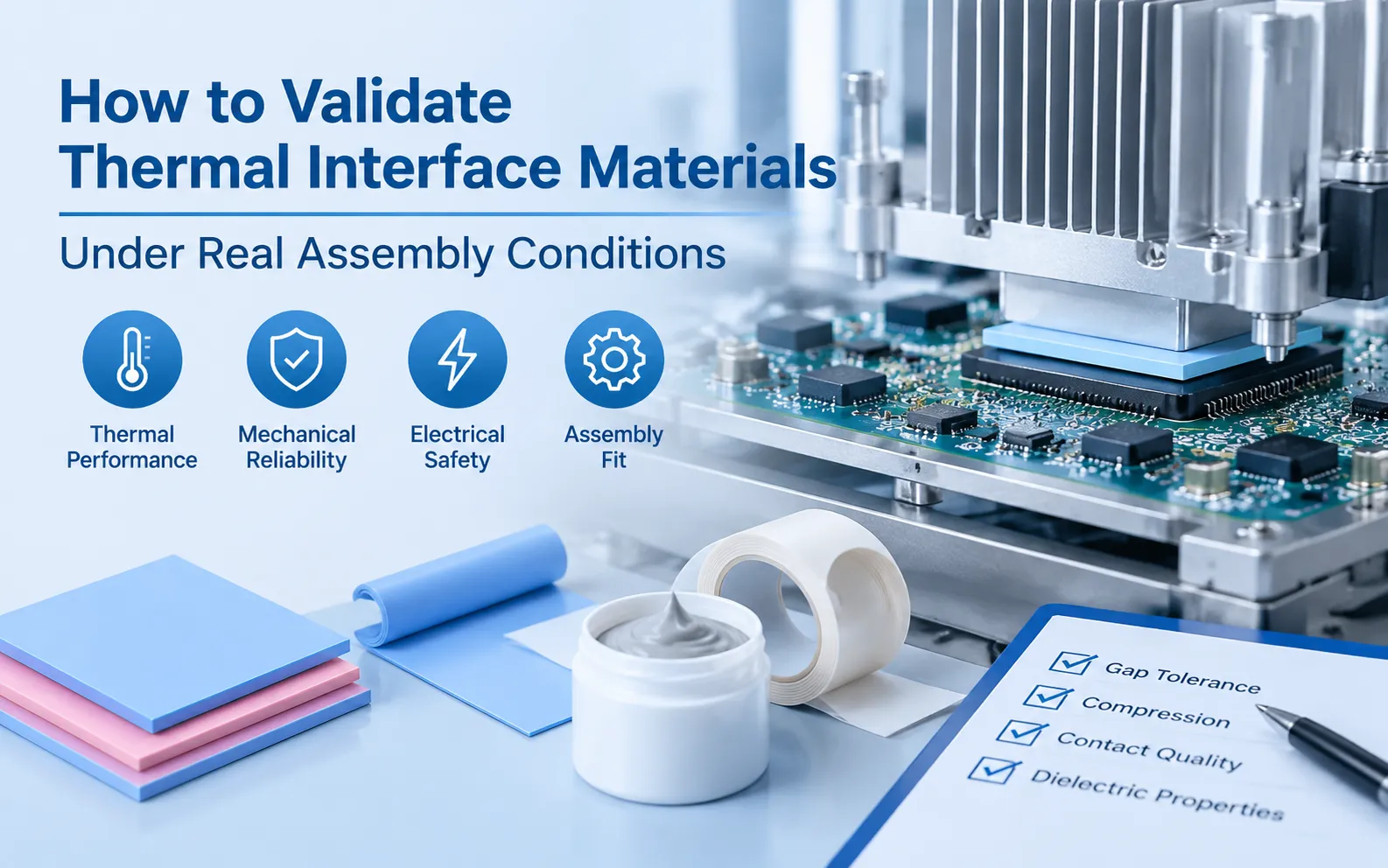
How to Validate Thermal Interface Materials Under Real Assembly Conditions?
Oct 14, 2026
How to Validate Thermal Interface Materials Under Real Assembly Conditions?
A thermal interface material (TIM) validation plan should connect the component temperature limit to the complete heat path, mechanical stack-up, electrical requirements, and assembly process. Thermal...
What's a Good Thermal Pad for NVMe SSDs?
Aug 17, 2026
What's a Good Thermal Pad for NVMe SSDs?
A good thermal pad for an NVMe SSD should do more than have a high W/m·K number. It should have the correct thickness, sufficient softness to conform to the SSD components, reliable electrical insula...
How Thick Should a Thermal Pad Be for an M.2 NVMe SSD?
Aug 15, 2026
How Thick Should a Thermal Pad Be for an M.2 NVMe SSD?
There is no universal thermal pad thickness for every M.2 NVMe SSD. The correct thickness is the smallest pad thickness that completely bridges the gap between the SSD components and the heatsink whil...
Thermal Putty vs Thermal Pads for GPU VRAM: Which One Should You Use?
Aug 13, 2026
Thermal Putty vs Thermal Pads for GPU VRAM: Which One Should You Use?
When replacing the thermal interface material on GPU VRAM, both thermal putty and thermal pads can transfer heat from memory modules to the graphics card cooler. The important difference is how they m...
Silicone vs Epoxy vs Polyurethane Potting Compounds: How to Choose for Electronics
Aug 11, 2026
Silicone vs Epoxy vs Polyurethane Potting Compounds: How to Choose for Electronics
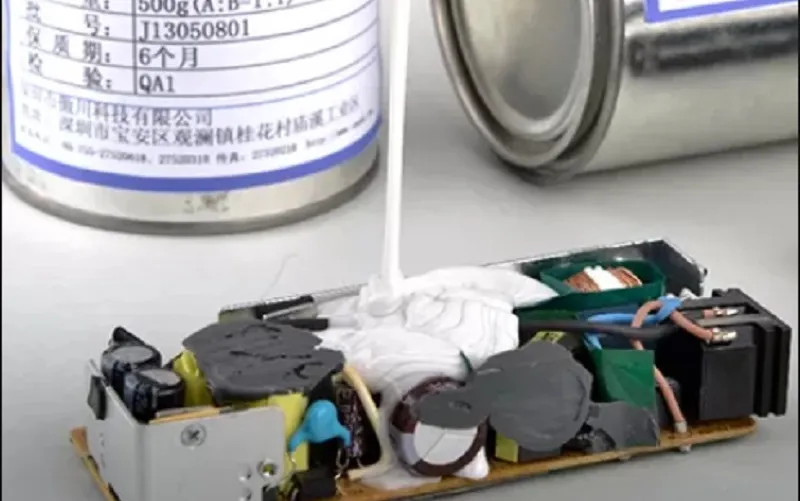
Choosing a potting material for electronics is not simply a matter of deciding which chemistry has the highest thermal conductivity or the strongest mechanical properties. The correct choice depends o...
Thermal Paste vs Thermal Putty: Key Differences, Performance, and Best Applications
May 04, 2026
Thermal Paste vs Thermal Putty: Key Differences, Performance, and Best Applications
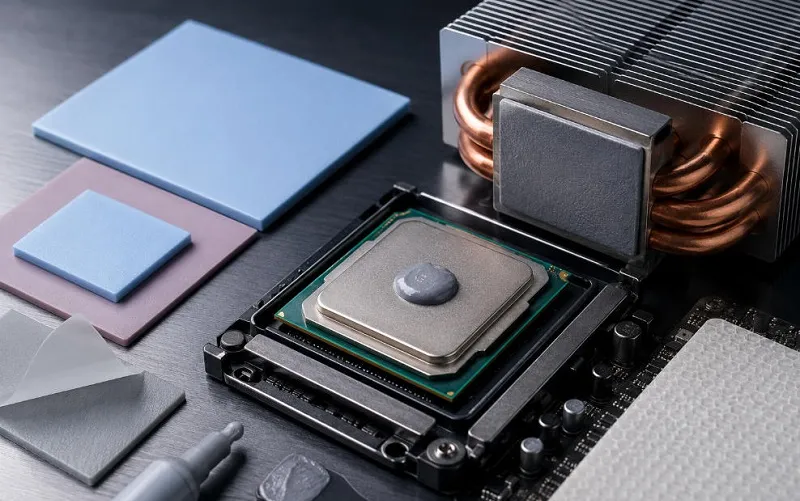
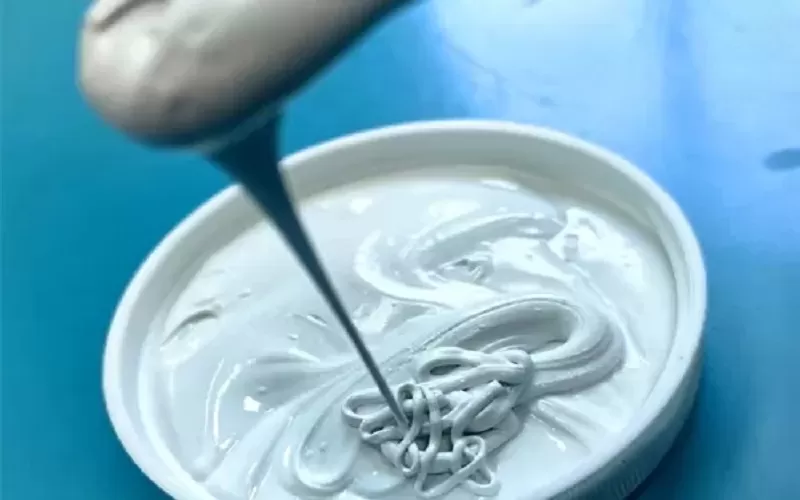
As electronic devices become more compact and powerful, effective heat dissipation is no longer optional—it’s essential. Whether you're designing consumer electronics, industrial equipment, or L...
We use cookies to optimise and personalise your experience, but you can choose to opt out of non-essential cookies.
To find out more, read our Privacy Policy
Reject All
Accept All