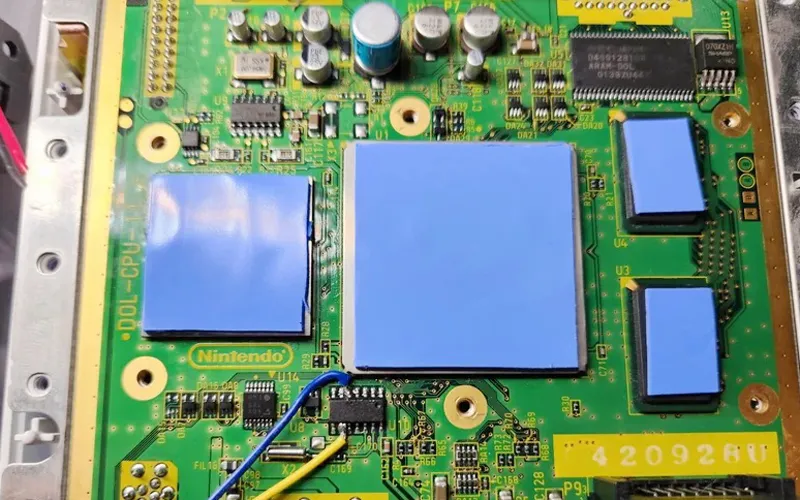
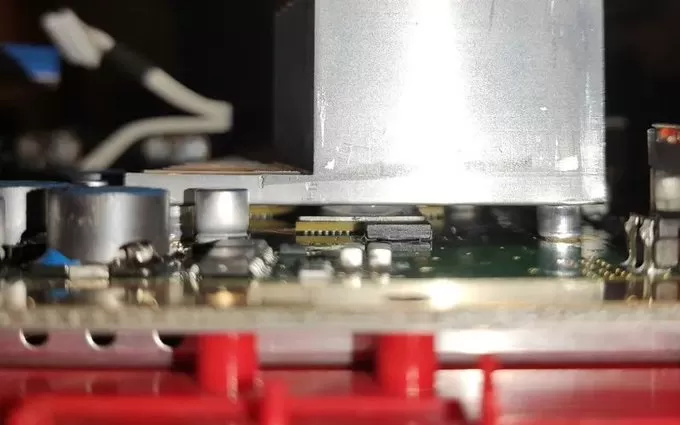
Choosing a potting material for electronics is not simply a matter of deciding which chemistry has the highest thermal conductivity or the strongest mechanical properties. The correct choice depends on how the electronics generate heat, how much mechanical stress the components can tolerate, the operating temperature range, environmental exposure, production requirements, and whether future repair or rework is expected.
For most electronic assemblies, the decision can be summarized this way:
Silicone is generally preferred when flexibility, thermal cycling, electrical insulation, and low mechanical stress are important.
Epoxy is usually preferred when rigidity, structural reinforcement, adhesion, and chemical resistance are the priorities.
Polyurethane often provides a middle ground between silicone flexibility and epoxy rigidity, especially where vibration resistance and cost need to be balanced.
For heat-generating electronics, chemistry alone is still not enough. Engineers may also need a thermal conductive potting compound that transfers heat from components toward the housing or another thermal path while maintaining electrical insulation.
AOK develops thermally conductive silicone potting materials specifically for this type of electronics thermal-management requirement, with available thermal conductivity spanning 0.2 to 4.0 W/(m·K) across its potting compound portfolio.
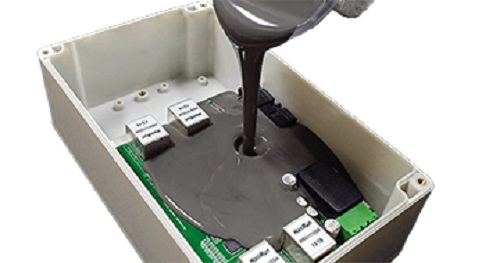
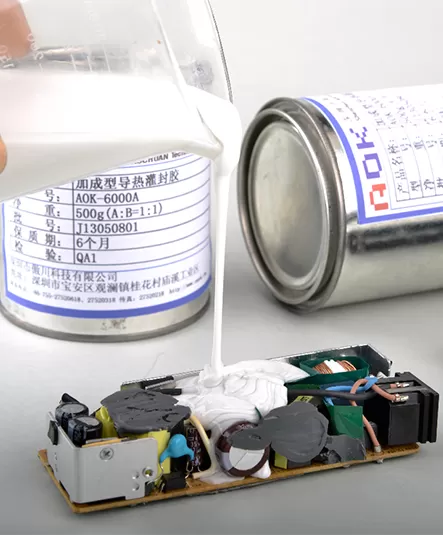
A potting compound is a resin system poured or dispensed around electronic components and cured inside an enclosure. After curing, the material becomes part of the assembly and can provide several functions simultaneously:
Electrical insulation
Moisture and dust protection
Mechanical stabilization
Vibration and shock resistance
Protection against contaminants
Heat transfer
Flame-retardant protection when required
Potting is commonly used in LED drivers, power supplies, automotive electronics, transformers, sensors, telecommunications equipment, battery-related electronics, industrial controls, and other assemblies exposed to demanding operating environments.
The important distinction is that potting fills much or all of the available cavity around the components. It therefore has a much greater influence on mechanical stress, thermal behavior, weight, and repairability than a thin conformal coating.
For applications where heat dissipation is a key design requirement, AOK, a reliable potting compound supplier, offers dedicated potting compound solutions with different thermal conductivity levels to match the material to the actual thermal load.
The following comparison provides a practical starting point.
Selection Factor | Silicone | Epoxy | Polyurethane |
Cured structure | Soft to elastomeric | Usually hard and rigid | Flexible to semi-rigid |
Stress on delicate components | Low | Higher | Low to moderate |
Thermal cycling resistance | Excellent | Moderate, formulation-dependent | Good |
Mechanical reinforcement | Moderate | Excellent | Good |
Vibration absorption | Excellent | Limited when highly rigid | Very good |
Chemical resistance | Good | Excellent | Good, formulation-dependent |
Moisture resistance | Excellent | Very good | Good |
High-temperature capability | Excellent | Good | Moderate |
Electrical insulation | Excellent | Excellent | Excellent |
Reworkability | Relatively better | Generally difficult | Moderate |
Typical fit | Power electronics, LEDs, sensors, automotive electronics | Transformers, rugged electronics, industrial modules | Sensors, automotive modules, consumer and industrial electronics |
Main consideration | Cost and silicone compatibility | Shrinkage and mechanical stress | Moisture sensitivity and upper-temperature limits |
These are general tendencies rather than fixed material specifications. A highly filled thermally conductive formulation may behave very differently from an unfilled general-purpose resin of the same chemistry.
That is why engineers should always evaluate the actual technical data sheet and validate the material in the final assembly.
A silicone potting compound for electronics is particularly useful when the assembly must tolerate repeated temperature changes without transferring excessive mechanical stress to the PCB or components.
Electronic components, PCB substrates, housings, solder joints, and potting materials all expand at different rates as temperature changes. A relatively soft silicone can accommodate part of this movement.
This makes silicone particularly valuable for:
Automotive electronic modules
LED drivers
Outdoor electronics
Power supplies
Telecom equipment
Sensitive sensors
Assemblies exposed to repeated thermal cycling
Electronics containing fragile solder joints or ceramic components
Silicone is also well suited to applications with wide temperature swings. Commercial electronics-grade silicone potting systems can be designed for operating environments extending to approximately -55°C to 200°C or higher, depending on the formulation.
Standard silicone itself is not necessarily highly thermally conductive. Thermally conductive fillers must be incorporated into the polymer system to increase heat transfer.
AOK's current thermally conductive silicone potting portfolio illustrates how widely this property can be adjusted:
GF200: 2.0 W/(m·K)
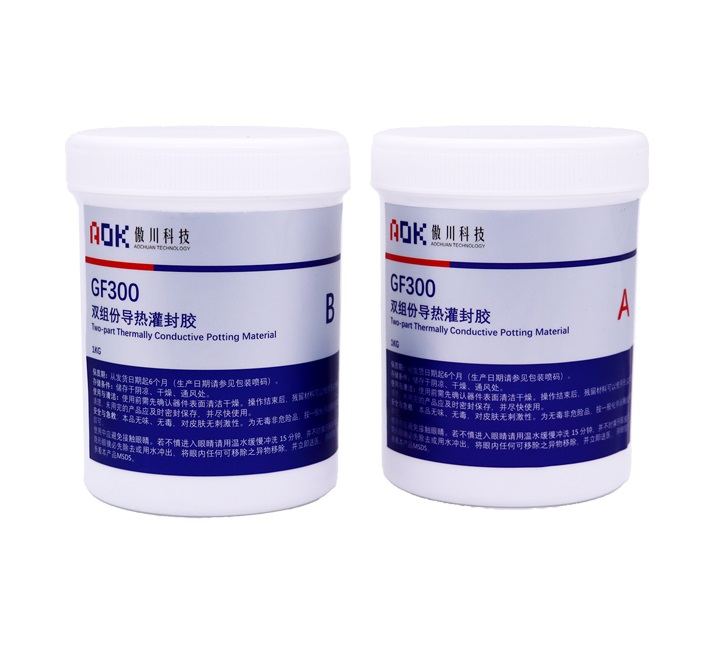
GF300: 3.0 W/(m·K)
GF400: 4.0 W/(m·K)
These products use two components mixed at a 1:1 ratio, allowing different thermal-performance levels to be selected without changing the fundamental silicone potting approach.
This is important because a 4.0 W/(m·K) material is not automatically required for every assembly. Higher filler loading can influence viscosity, density, flow characteristics, and cost.
The goal should be to achieve sufficient heat transfer for the system—not simply to specify the largest conductivity number available.
Epoxy becomes attractive when mechanical reinforcement is more important than flexibility.
After curing, many epoxy systems form a hard cross-linked structure that strongly supports electronic components and can provide excellent adhesion to suitable substrates.
Epoxy is often selected for:
Transformers
Coils
Industrial control modules
Power conversion equipment
Components exposed to oils or chemicals
Assemblies requiring strong structural reinforcement
Applications where access after potting is not expected
One of epoxy's greatest strengths is also one of its most important design considerations: rigidity.
A rigid encapsulant can hold components securely, but it transfers more mechanical stress to the components when the assembly expands and contracts.
For robust transformers this may be acceptable or desirable. For a delicate PCB populated with ceramic devices, fine solder joints, or temperature-sensitive components, the same rigidity can become a reliability concern.
Epoxy curing is an exothermic reaction.
In a large potting volume, the heat generated during cure can be substantially greater than in a thin layer. Engineers therefore need to consider:
Pour depth
Component temperature limits
Cure schedule
Batch size
Resin mass
Shrinkage
Internal stress after cure
This becomes particularly important when deep enclosures are filled in a single operation.
A material that works perfectly for a 3 mm encapsulation layer may behave differently in a 30 mm-deep enclosure.
Polyurethane often fills the performance gap between epoxy and silicone.
Compared with a rigid epoxy, polyurethane can provide greater flexibility and vibration absorption. Compared with premium silicone formulations, it can offer an attractive balance between performance and material cost.
Typical applications include:
Automotive control modules
Sensors
Cable electronics
Consumer electronics
Industrial control systems
Vibration-sensitive assemblies
Medium-temperature electronic environments
Polyurethane formulations can range from relatively soft elastomers to significantly harder systems, so the term “polyurethane potting compound” does not describe one single mechanical behavior.
Polyurethane chemistry needs to be selected carefully when high temperature, severe moisture exposure, or long-term outdoor operation is expected.
The engineer should examine:
Maximum continuous service temperature
Hydrolysis resistance
Moisture absorption
Chemical exposure
UV exposure where relevant
Long-term hardness stability
For moderate environments, polyurethane can be an excellent option. For severe thermal cycling or very high operating temperatures, silicone often provides a wider engineering margin.
For heat-generating electronics, designers understandably focus on W/(m·K).
But thermal conductivity alone does not determine whether a thermal conductive potting compound will perform well.
Consider two materials:
Material A
Thermal conductivity: 4.0 W/(m·K)
Very high viscosity
Poor filling around small components
Traps voids during dispensing
Material B
Thermal conductivity: 2.0 W/(m·K)
Good flow
Fills the complete cavity
Creates consistent contact between the component and enclosure
Depending on the geometry, Material B may produce the more reliable thermal path.
Air has extremely low thermal conductivity compared with filled potting materials. Large voids can therefore undermine the benefit of selecting a higher-conductivity formulation.
A more useful thermal selection process considers:
Heat source → potting compound → enclosure → ambient or cooling system
If one part of that path has excessive thermal resistance, improving another part may provide little system-level benefit.
Determine how much heat must actually pass through the potting material.
AOK's potting compound range provides 0.2–4.0 W/(m·K) options, enabling conductivity to be selected according to the thermal requirement rather than using one formulation for every design.
For low-power electronics, maximum conductivity may not be necessary.
For high-power modules, LED drivers, power supplies, or charging electronics, higher conductivity may provide meaningful temperature reduction.
A material must reach the areas where protection is needed.
Low-viscosity formulations can flow around:
Fine PCB components
Transformer windings
Connectors
Narrow gaps
Irregular component geometries
AOK's GF200-L, for example, is designed as a low-viscosity, low-volatility two-component silicone potting compound and can self-deair after its A and B components are mixed at 1:1.
Flow behavior becomes especially important in automated dispensing.
The useful working window needs to match the production process.
Ask:
How long does the operator have after mixing?
Can the material cure at room temperature?
Can elevated temperature accelerate the process?
Can the complete enclosure be filled before viscosity increases?
How does cure time affect takt time?
AOK lists adjustable working time as one of the design advantages of its potting compound range, while its systems are also suitable for automated dispensing processes.
Electronic potting materials commonly serve as electrical insulation as well as environmental protection.
Do not evaluate only thermal conductivity.
The design may also require:
High dielectric strength
High volume resistivity
Appropriate dielectric constant
Flame resistance
Sufficient insulation thickness
For power electronics, this combination is particularly important: the material must transfer heat while maintaining electrical isolation.
Power supplies, automotive electronics, charging equipment, and many industrial assemblies have specific fire-safety requirements.
AOK's potting compound portfolio can comply with the UL 94 V-0 flame-retardant classification.
Under UL 94 vertical testing, V-0 represents a more stringent vertical-burning classification than V-1 or V-2.
However, engineers should always confirm whether the specific formulation, thickness, end product, and required certification scope match the application's compliance requirements.
A useful way to narrow the choice is to start with the dominant failure risk.
Main Design Requirement | First Material to Evaluate | Why |
Severe thermal cycling | Silicone | Flexible material accommodates dimensional movement |
Fragile PCB components | Silicone | Low mechanical stress after cure |
High-temperature operation | Silicone | Broad temperature capability |
Maximum structural rigidity | Epoxy | Hard cured structure |
Strong chemical exposure | Epoxy | Excellent chemical resistance |
Permanent encapsulation | Epoxy | High strength and adhesion |
High vibration | Silicone or polyurethane | Better energy absorption |
Balanced performance and cost | Polyurethane | Intermediate mechanical properties |
Heat-generating electronics | Thermally conductive silicone, epoxy, or PU | Thermal filler creates a heat-transfer pathway |
Automated dispensing | Application-specific | Viscosity, mix ratio, working time, and de-airing must suit the production line |
The correct approach is therefore not:
“Is silicone better than epoxy?”
It is:
“Which failure mechanism is most likely in this assembly, and which material properties reduce that risk?”
That shift in thinking usually leads to a much more reliable material decision.
Consider an outdoor LED driver.
The assembly may experience:
Repeated heating during operation
Cooling after shutdown
Outdoor humidity
Vibration
Electrical insulation requirements
Continuous internal heat generation
A rigid epoxy may provide excellent environmental protection, but repeated temperature changes can impose stress on components.
Polyurethane may provide better flexibility.
A thermally conductive silicone system may be preferred when the design needs a combination of:
Temperature stability
Electrical insulation
Moisture resistance
Flexibility
Heat dissipation
If thermal simulations or prototype measurements show that the internal temperature is still excessive, the engineer can then evaluate higher-conductivity formulations rather than immediately specifying the maximum available conductivity.
This type of application-based selection is more reliable than choosing the chemistry from one specification alone.
A transformer presents a different set of priorities.
The design may require:
Structural support
Winding stabilization
Electrical insulation
Void filling
Chemical resistance
Heat transfer
Here, epoxy may become a stronger candidate because rigidity can be beneficial rather than harmful.
However, if the transformer experiences substantial temperature cycling or contains components sensitive to mechanical stress, a softer formulation should also be evaluated.
Again, the device—not the material category—should determine the final choice.
Even a correctly specified potting compound can fail if the dispensing and curing process introduces defects.
Common process problems include:
Two-component materials need accurate proportioning. A 1:1 product should therefore be processed with equipment capable of maintaining that ratio consistently.
Incorrect mixing can cause:
Incomplete curing
Soft spots
Reduced thermal performance
Poor mechanical properties
Surface tackiness
Bubbles can become:
Thermal barriers
Electrical weak points
Moisture collection zones
Mechanical stress concentrators
Material degassing, controlled dispensing, suitable viscosity, and enclosure design all influence void formation.
Fast dispensing may trap air underneath components.
For complex PCB geometries, dispense path and flow behavior should be validated before mass production.
Temperature and time affect final material properties.
A production team should therefore follow the supplier's specified mixing, working-time, and curing conditions rather than treating potting as a simple “pour and wait” process.
AOK has developed thermal-management materials since 2004 for applications including consumer electronics, power supplies, automotive electronics, LED lighting, network communications, and industrial equipment.
Its potting compound portfolio is centered on thermally conductive silicone systems because many modern electronics require more than environmental encapsulation—they also need controlled heat transfer and low mechanical stress.
Current AOK options include:
GF200 — 2.0 W/(m·K)
GF200-L — low-viscosity, low-volatility formulation
GF300 — 3.0 W/(m·K)
GF400 — 4.0 W/(m·K)
The broader range supports conductivity values from 0.2 to 4.0 W/(m·K), high electrical insulation, adjustable working time, UL94 V-0 flame-retardant options, good flow, and automated dispensing compatibility.
AOK also develops thermal pads, liquid gap fillers, thermal grease, phase-change materials, liquid-metal thermal paste, and other thermal-management products. Engineers designing complete heat-transfer paths can review AOK's thermal management applications to evaluate materials according to the final equipment environment.
Silicone is generally the most flexible and tolerant of thermal cycling. Epoxy usually provides the greatest rigidity, structural reinforcement, and chemical resistance. Polyurethane typically falls between them, offering more flexibility than epoxy while maintaining good mechanical protection.
Silicone is often the first material to evaluate for high-temperature or wide-temperature-range electronics because appropriately formulated silicone systems can maintain flexibility across demanding thermal conditions. The exact operating limit must still be confirmed from the individual material's technical data sheet.
Yes. A silicone potting compound for electronics can be particularly useful for power modules, LED drivers, power supplies, automotive electronics, and other heat-generating assemblies when electrical insulation, thermal cycling resistance, and low mechanical stress are required. Thermally conductive fillers can also improve heat transfer.
No. Thermal conductivity is only one part of the thermal system. A highly conductive material that cannot flow properly around components or creates voids may perform worse than a lower-conductivity material that produces complete and consistent contact. Viscosity, filling quality, insulation, hardness, and reliability must be evaluated together.
Potentially. The concern is not that epoxy is inherently damaging, but that rigid systems can transfer cure shrinkage and thermal-expansion stress to delicate components. For fragile solder joints, ceramics, or assemblies exposed to severe thermal cycling, engineers should assess mechanical stress before choosing a rigid formulation.
Start with the application's heat generation, operating temperature, gap geometry, component sensitivity, electrical insulation requirement, environmental exposure, production process, and expected service life. Then compare conductivity, viscosity, hardness, cure time, working time, flame retardancy, and dispensing requirements. Prototype testing should confirm the final choice before mass production.
There is no universal winner in the silicone vs epoxy vs polyurethane potting compound comparison.
Choose silicone when flexibility, temperature cycling, low component stress, electrical insulation, and environmental resistance are the dominant requirements.
Choose epoxy when structural reinforcement, rigidity, strong adhesion, and chemical resistance are more important.
Choose polyurethane when the application needs a practical balance of flexibility, vibration protection, mechanical durability, and cost.
For heat-generating electronic assemblies, the decision goes one step further. Engineers must select not only the polymer chemistry but also the appropriate thermal conductivity, viscosity, hardness, cure behavior, insulation performance, and manufacturing process.
AOK's thermally conductive silicone potting materials provide thermal conductivity options from 0.2 to 4.0 W/(m·K), including 2.0, 3.0, and 4.0 W/(m·K) two-part formulations for different thermal-management requirements. Rather than automatically choosing the highest conductivity, the better approach is to match the material to the complete thermal, electrical, mechanical, and production requirements of the electronics.
For a new LED driver, power supply, automotive module, telecom device, battery-related assembly, or other electronics project, you can contact AOK to discuss operating temperature, required thermal conductivity, dispensing method, curing conditions, and other application requirements before selecting a formulation.

 +86 755 2976 5899

 English