As electronic devices become more compact and powerful, effective heat dissipation is no longer optional—it’s essential. Whether you're designing consumer electronics, industrial equipment, or LED systems, choosing the right thermal interface material (TIM) directly impacts performance, reliability, and product lifespan.
Two commonly compared solutions are thermal paste (thermal grease) and thermal putty (thermal transfer putty). While they may seem similar at first glance, they serve very different purposes.
This guide breaks down their differences, real-world applications, and how to choose the right material—featuring solutions from AOK Technologies, a trusted manufacturer of advanced thermal management materials.
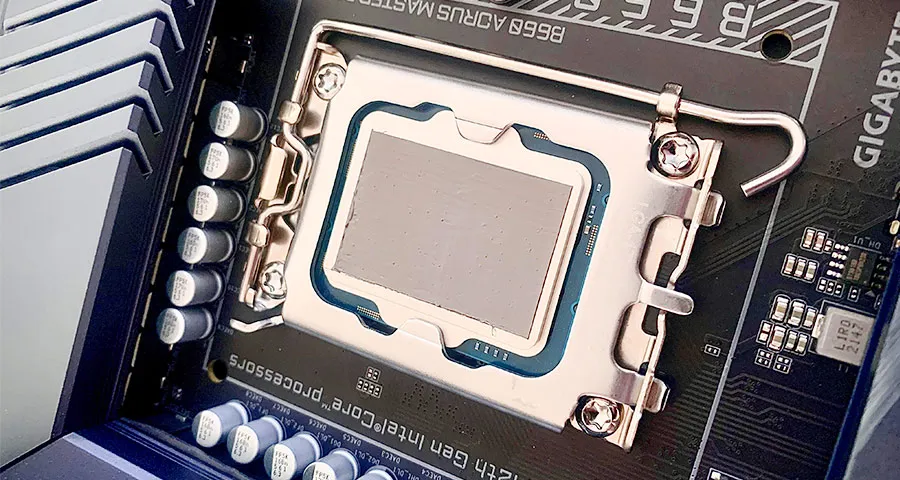
Thermal paste is a viscous, non‑curing compound applied in a thin layer (often 10–50 µm) between a heat source (e.g., CPU, MOSFET) and a heatsink. It is intended to replace tiny air gaps, lowering interface thermal resistance and enabling higher‑performance cooling.
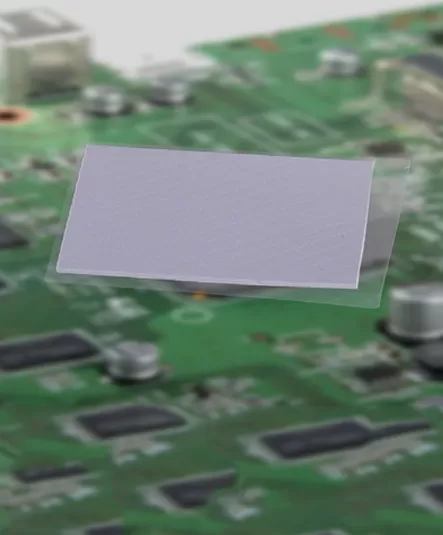
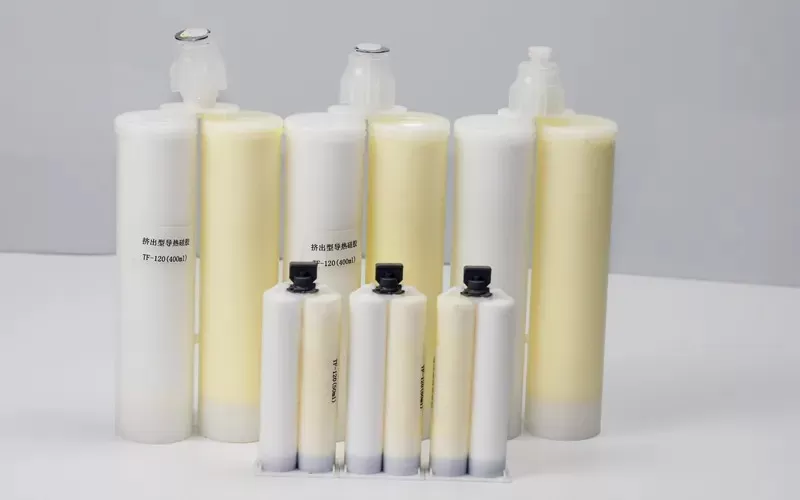
Thermal putty is a highly moldable, semi‑solid material that behaves like a gap‑filler between components and heat spreaders. It can conform to complex geometries, fill larger tolerances, and maintain stability under vibration and mechanical stress.
Both materials typically use silicone‑based matrices with ceramic or metal‑oxide fillers to achieve thermal conductivity in the 1–15 W/(m·K) range.
Thermal paste (AOK TG series) offers thermal conductivity from about 1.0–6.0 W/(m·K), with extremely low oil separation and optimized wettability for sub‑50‑µm bond lines.
Thermal putty (AOK TM series) spans roughly 2.0–15.0 W/(m·K), allowing engineers to choose higher‑conductivity grades for demanding modules.
Crucially, thermal paste can be compressed into ultra‑thin layers, which often results in lower total thermal resistance than putty at the same nominal conductivity, even if the putty’s bulk conductivity is higher.
Thermal grease commonly operates from –50°C to about 200°C, with good resistance to pump‑out and aging when formulated correctly.
Thermal putty tends to range from –50°C to about 150–180°C, offering excellent retention of properties under repeated thermal cycling and vibration.
Because thermal putty does not cure and has low compression stress, it tends to require less rework and is preferred in assemblies that may be disassembled or serviced.
Thermal paste must be applied in a thin, controlled layer to avoid bleeding, uneven spreading, or excess thickness. It is ideal for flat, mating surfaces such as processors and standard heatsinks.
Thermal putty can fill larger gaps (100–1000 µm or more) and is forgiving of uneven topologies (e.g., busbars, irregular ICs, curved surfaces).
Criterion | Thermal Paste (Thermal Grease / TIM Paste) | Thermal Putty (Thermal Transfer Putty) |
Typical thermal conductivity | 1.0–8.0 W/(m·K) (commonly 3–6) | 2.0–10.0 W/(m·K) (some high-filler grades up to ~15 W/(m·K)) |
Typical bond line thickness | 10–50 µm (ultra-thin interface) | 100–1000 µm (0.1–1.0 mm typical; up to ~3 mm in special cases) |
Effective thermal resistance | Very low (best in thin-bond scenarios) | Moderate (highly thickness-dependent) |
Gap-filling capability | Limited (requires flat, smooth surfaces) | Excellent (handles uneven, stacked, and irregular components) |
Surface conformability | High wetting on micro surfaces | High compressibility (typically 30–60%, formulation-dependent) |
Mechanical stability (shock/vibration) | Moderate (possible pump-out over time) | High (stable under vibration and thermal cycling) |
Typical operating temperature | –50°C to 150–200°C (high-end grades up to ~250°C) | –50°C to 150–180°C (some high-temperature formulations up to ~200°C) |
Automation compatibility | Screen printing/dispensing (precision-sensitive) | Ideal for automated dispensing/gap control |
Reusability | Not recommended (single-use interface) | Limited reusability (depends on formulation and post-assembly condition) |
Typical applications | CPUs, GPUs, power ICs, LED modules, small-footprint consumer electronics | VRAM, inductors, power modules, EV/HEV converters, 5G/RF power stages, industrial drives |
Values are typical ranges based on commercial thermal interface materials; actual performance depends on product formulation, bond line thickness, and assembly conditions.
Thermal paste is the best choice when:
Surfaces are flat and well-machined
You need maximum thermal conductivity
The gap is extremely small
Precision and thin bond lines are required
CPUs and GPUs
Power transistors
LED modules
High-performance computing
Thermal putty is more suitable when:
Components have uneven heights
You need to bridge large gaps
Mechanical tolerance is an issue
Vibration resistance is required
Memory chips (VRAM)
Inductors and capacitors
Automotive ECUs
5G base stations and telecom equipment
At AOK Technologies, we specialize in high-performance thermal interface materials tailored for industrial and commercial applications.
Wide range of TIMs (paste, putty, pads, gels)
Custom formulations available
Stable thermal performance under extreme conditions
Trusted by global OEMs
1. Is thermal paste the same as thermal grease?
Yes. “Thermal paste” and “thermal grease” are commonly used interchangeably to describe viscous, non‑curing thermal interface materials.
2. Is thermal putty better than thermal paste?
Not universally. Putty excels at gap‑filling and conformability, while paste usually offers lower thermal resistance in thin‑bond assemblies. The “better” choice depends on your geometry, tolerance, and thermal budget.
3. Can I mix thermal paste and thermal putty?
In general, it is not recommended. Each TIM is formulated for specific thickness, filler loading, and shear behavior; mixing can unpredictably increase thermal resistance or cause reliability issues.
Choosing between thermal paste and thermal putty is not about which is better—it’s about which is right for your application.
Use thermal paste for high-performance, thin interfaces
Use thermal putty for gap filling and flexibility
By selecting the correct material, you can improve thermal efficiency, extend product lifespan, and ensure system reliability.
At AOK Technologies, our high‑performance thermal grease and thermal putty lines are engineered to deliver reliable, long‑term thermal transfer under real‑world conditions. Whether you’re selecting a thermal interface paste for a server design or a thermal transfer putty for EV power modules, AOK’s technical support is available to help you optimize performance and reliability.

 +86 755 2976 5899

 English