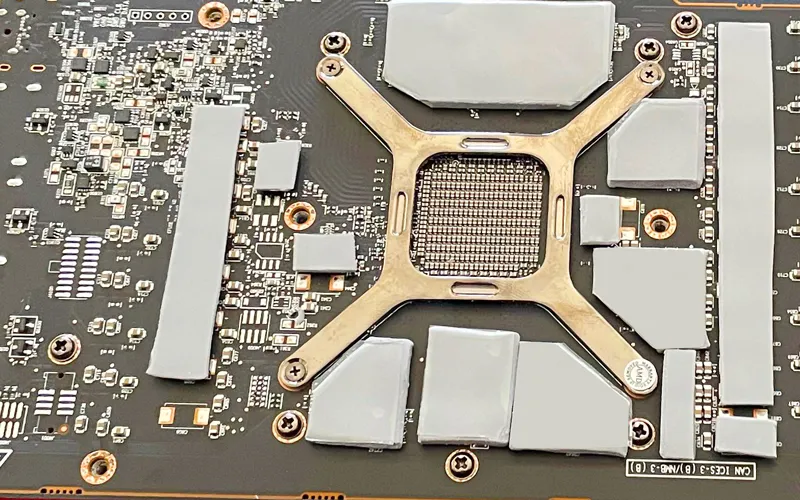
Choose a thermal pad for a heat sink by the installed gap, heat load, mounting force, electrical needs, and operating environment. Conductivity helps screen materials; it does not predict finished assembly temperature alone.
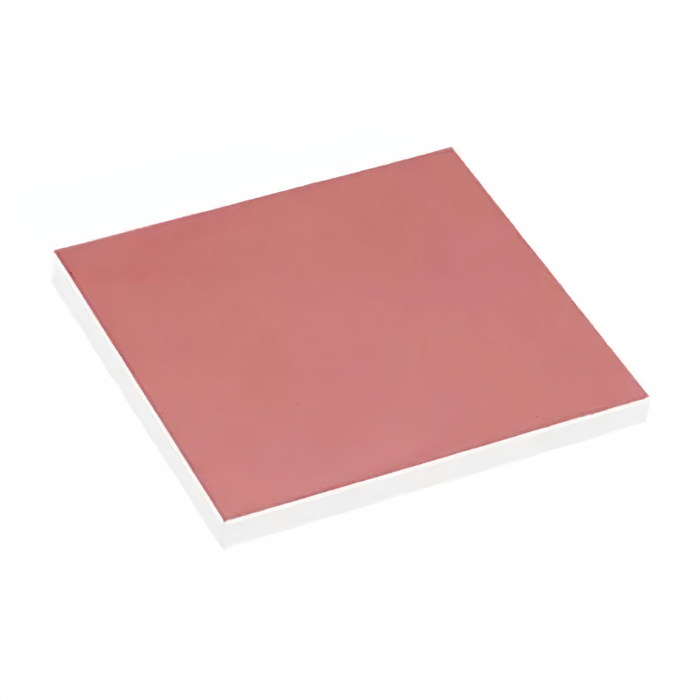
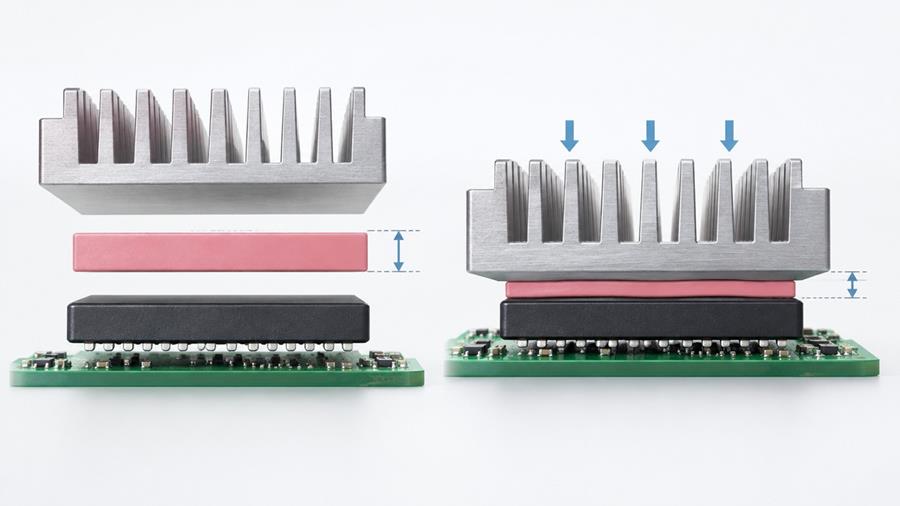
Record minimum and maximum gap, including component height, heat-sink flatness, board deflection, hardware, and assembly tolerances. Check contact area, surface condition, and fragile packages. The pad must contact both surfaces at the largest gap without overloading components at the tightest gap. Specify compressed thickness or compression range when available.
Use grade-specific compression data; hardness scales are not directly comparable. Too little compression can leave incomplete contact; too much can overload a package, distort a board, or squeeze out material. Evaluate the pad with the actual mounting hardware.
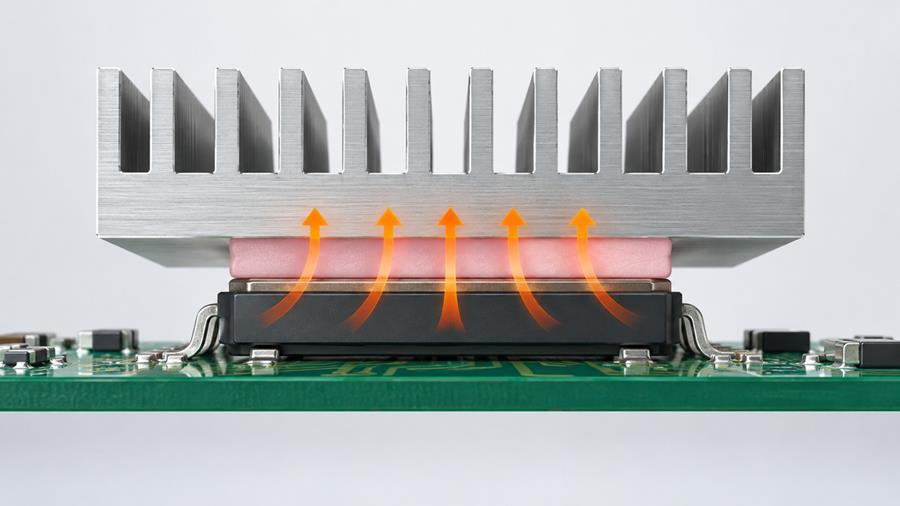
Thermal conductivity in W/(m·K) is one material property. Installed performance also depends on thickness, contact resistance, pressure, and the rest of the heat path. Review thermal resistance or impedance where available. ASTM D5470 measures steady-state impedance under an idealized heat-flow pattern; results do not directly represent most assemblies. ISO 22007-2:2022 uses a transient plane heat-source method for plastics. Check method, specimen, thickness, temperature, and pressure before comparing values.
Confirm whether the pad must isolate the component from a conductive heat sink. Review dielectric strength, volume resistivity, and system requirements for the exact grade. Define applicable temperature, cycling, humidity, vibration, chemical, contamination, and flammability requirements. Confirm the grade and dimensions in the current data sheet.
Define heat source, heat sink, temperature limit, and operating conditions.
Measure the gap and coverage; set thermal, electrical, and mechanical criteria.
Test samples with the intended thickness and mounting method under expected load and ambient conditions.
Measure temperature, inspect contact and compression, and record the grade, setup, and results.
Do not choose by conductivity alone or compare data from different methods. Review AOK’s thermal pad range and catalogue. Share the gap, operating temperature, and electrical requirements when requesting a recommendation.

 +86 755 2976 5899


 English