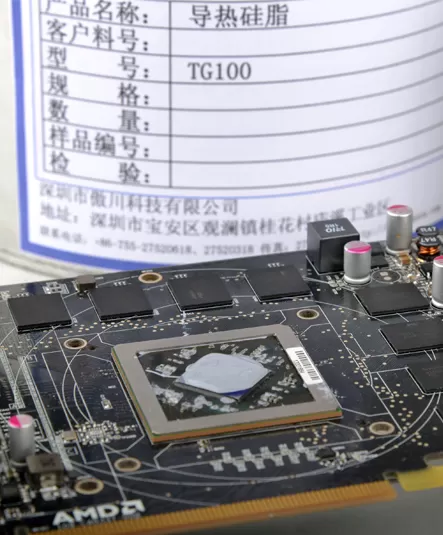
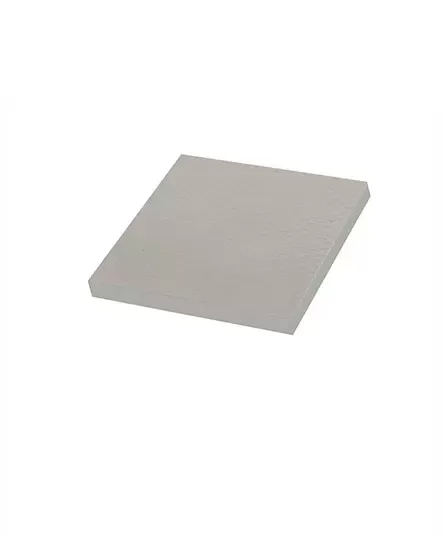
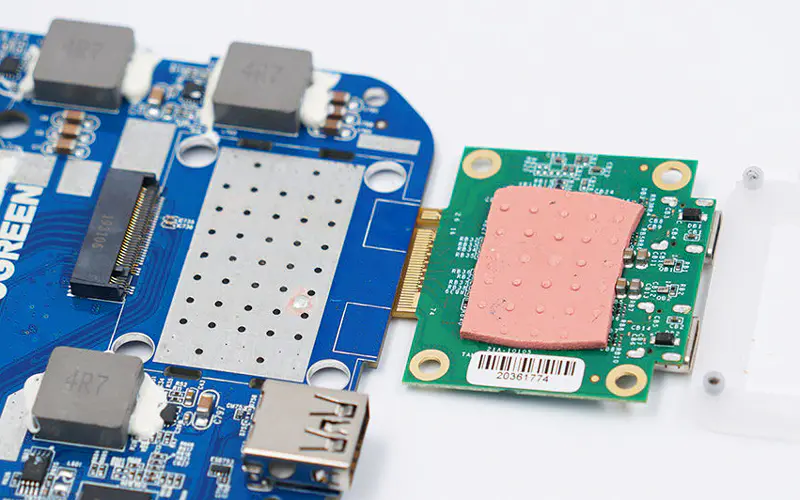
Choosing a thermal interface material involves more than comparing thermal conductivity values. For electronic assemblies with strict material compatibility requirements, a silicon free gap filler pad may be worth evaluating when conventional silicone-based materials are unsuitable. The right solution must bridge component gaps, support heat transfer, and meet the mechanical and environmental requirements of the application. This guide explains the key selection criteria and how AOK Technologies' Silicone Free Thermal Pad range can fit into an engineering evaluation.
A thermal interface pad fills small gaps between a heat-generating component and a heat sink or metal housing. By reducing air pockets at the interface, it can improve the path through which heat leaves the component.Silicone-free materials may be considered when an application has restrictions involving silicone-containing compounds, potential contamination, or compatibility with nearby materials and manufacturing processes. However, the term silicone-free does not automatically guarantee low outgassing, universal compatibility, or superior thermal performance. These properties depend on the specific formulation and should be confirmed through current technical documentation.Before choosing a material, identify the actual engineering concern. Is the design sensitive to contamination? Does the assembly involve coating, bonding, or another process with material restrictions? Does the component operate in a demanding temperature environment? Clear answers help define the evidence required from a supplier.For background on material outgassing, engineers can consult the NASA Outgassing Database. Database information should be interpreted in the context of the intended application rather than treated as automatic approval for a particular assembly.
Thermal conductivity is important, but it cannot determine suitability on its own. A material must also conform to the available gap and maintain reliable contact under the assembly’s actual mounting conditions.Evaluate the following specifications:
Thermal performance: Review thermal conductivity and thermal resistance data, including the test methods and conditions.
Thickness: Match the material to the measured gap and its manufacturing tolerances.
Compression: Confirm hardness, compressibility, and the pressure required to establish contact.
Electrical properties: Check dielectric requirements if the pad sits near energized components.
Material compatibility: Evaluate contact with plastics, metals, coatings, adhesives, and other adjacent materials.
Environmental durability: Review the applicable operating-temperature range and relevant aging requirements.
Engineers should compare candidate materials under equivalent conditions. A conductivity value measured using one method may not be directly comparable with a result obtained using another. The installed interface also depends on surface flatness, clamping force, and the dimensions of the complete assembly.
Silicone-based thermal pads are widely used because many formulations provide useful compliance and gap-filling performance. Silicone-free alternatives may be more appropriate when a project has specific material restrictions. Neither category is automatically the better choice for every application.
| Selection factor | Silicone-free thermal pad | Conventional silicone thermal pad |
|---|---|---|
| Material restrictions | Worth evaluating when silicone must be avoided | May not meet a strict silicone-free requirement |
| Thermal performance | Depends on the specific formulation and installation | Depends on the specific formulation and installation |
| Compression | Verify grade-specific data | Verify grade-specific data |
| Compatibility | Test against the actual materials and process | Test against the actual materials and process |
| Qualification | Requires application-specific validation | Requires application-specific validation |
The most suitable material is the one that meets the assembly's documented requirements. Product labels alone cannot establish performance, compatibility, or long-term reliability.
A practical qualification process begins with measurement. Determine the real interface gap, including tolerance extremes, rather than relying only on nominal CAD dimensions. Then evaluate candidate thicknesses against the available clamping force and component pressure limits.Next, test thermal performance in a representative fixture. Where material compatibility is important, perform appropriate screening or aging tests. Environmental checks should reflect the application's operating conditions and failure risks.Finally, document the approved material grade, part number, drawing revision, and incoming inspection criteria. This helps prevent unqualified substitutions during production.
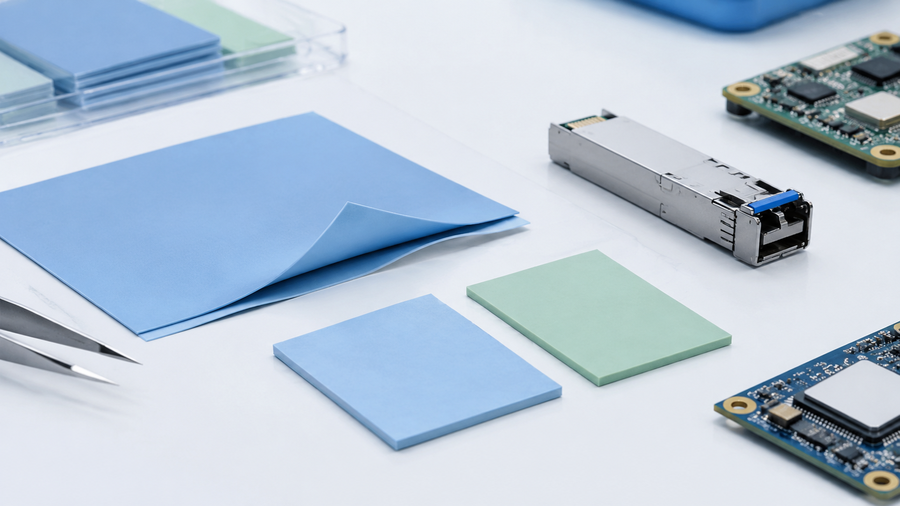
AOK Technologies offers a dedicated Silicone Free Thermal Pad product range. For engineers assessing a potential alternative to silicone-based interfaces, this product family provides a starting point for discussing material requirements and suitable candidate grades.The broader AOK Technologies product catalogue can also help buyers compare thermal-interface material categories.When requesting technical information, provide the interface gap, heat load, operating temperatures, mounting method, electrical requirements, and any restrictions involving silicone. Ask for the latest technical data sheet and clarify which performance claims have supporting test data. The final selection should be based on the exact product grade and validation results.
A silicone-free thermal interface should be selected by balancing heat transfer, gap filling, compression, material compatibility, and environmental durability. Define why silicone must be avoided, measure the actual interface, and compare documented properties under relevant conditions. Before production release, validate the complete assembly and confirm the exact grade with the supplier. AOK Technologies' Silicone Free Thermal Pad range is a starting point for a requirement-led evaluation.
Does silicone-free automatically mean low outgassing?
No. Outgassing depends on the complete formulation and test conditions. Request relevant test data.
Can I replace an existing silicone pad without redesigning the assembly?
Not necessarily. Differences in thickness, compression, and thermal resistance may require revalidation.
Is the highest thermal conductivity always the best choice?
No. Contact quality, thickness, and mounting pressure also affect interface performance.
What should I include in a supplier inquiry?
Provide dimensions, interface gap, heat load, operating temperatures, pressure limits, and material restrictions.
Can a thermal pad be made into a custom shape?
Confirm available formats, tolerances, and customization options with the supplier.
Which tests should be completed before production?
Evaluate thermal performance, mechanical fit, and any application-specific compatibility or environmental requirements.

 +86 755 2976 5899


 English