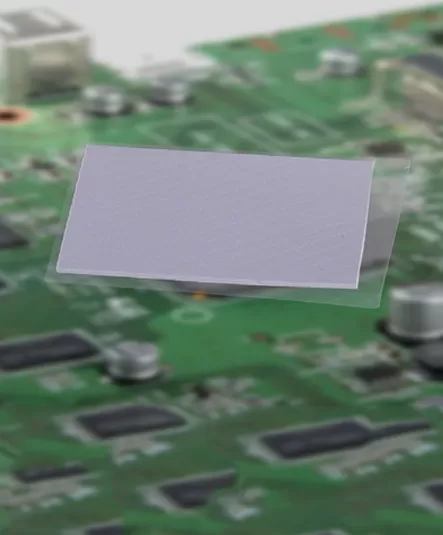
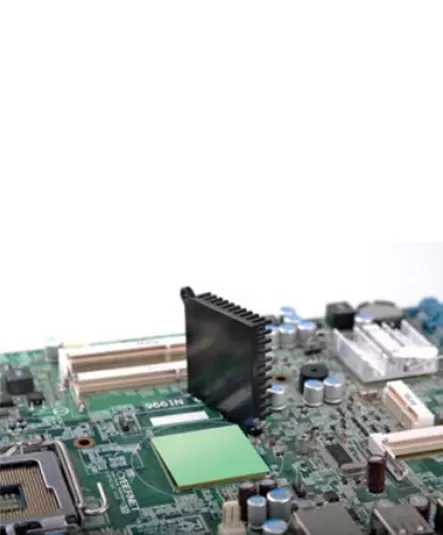
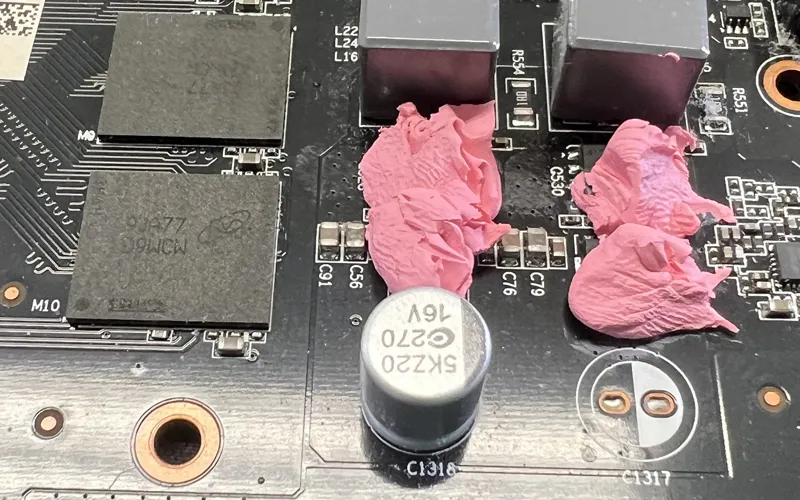
Silicone thermal interface materials (TIMs) are silicone-based compounds filled with thermally conductive materials. They are placed between a heat-generating component and a heat sink, cooling plate or housing to fill surface irregularities, reduce interface thermal resistance and provide a more effective path for heat transfer.
Silicone is used as the supporting matrix because it can remain soft and conformable, while the thermally conductive fillers provide most of the heat-transfer capability. Depending on the application, silicone TIMs can be supplied as thermal pads, dispensable gap fillers or thermal grease.
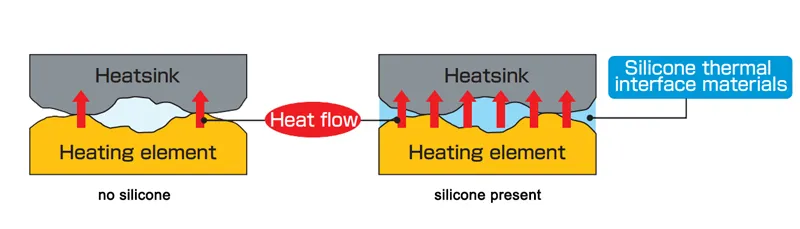
Silicone thermal interface materials fill a fine gap between a heat-generating unit and a heatsink, and efficiently transfer heat.
Even surfaces that appear flat contain microscopic peaks and valleys. When an electronic component is mounted directly against a heat sink, these surface irregularities leave small air gaps between the two mating surfaces. Because air is a poor thermal conductor, these gaps increase contact thermal resistance and restrict heat flow from the component to the heat sink.
A silicone thermal interface material fills these microscopic gaps and displaces much of the trapped air. By conforming to both surfaces, the TIM increases the effective contact area and creates a more continuous thermal path between the heat-generating component and the heat sink. This reduces interface thermal resistance and allows the cooling structure to transfer heat more effectively.
A typical silicone thermal interface material combines two main elements: a silicone polymer matrix and thermally conductive fillers.
The silicone matrix provides the physical characteristics needed at the interface. It allows the material to remain flexible, compressible or dispensable so that it can conform to uneven surfaces without placing excessive mechanical stress on electronic components.
The fillers provide most of the thermal conductivity. Depending on the formulation, thermally conductive ceramic fillers are dispersed through the silicone matrix to create paths for heat to move through the material.
Silicone thermal interface materials are widely used where heat must be transferred from electronic components to heat sinks, metal housings, cooling plates or other thermal structures.
Typical applications include:
Electric vehicles: battery systems, power conversion equipment and electronic control modules
Data centers and computing: processors, memory, power supplies and other high-power electronic assemblies
Telecommunications and 5G equipment: communication modules, base stations and networking hardware
Consumer electronics: compact electronic devices where components and housings have limited space for cooling
Industrial electronics: power electronics, LED systems, industrial controls and power supplies
ADAS and automotive electronics: control units, sensors and other electronics exposed to demanding operating conditions
AOK supplies silicone heat transfer pad, liquid gap filler and thermal grease for different thermal interface requirements. Engineers can also review AOK's thermal interface material catalogue for product specifications and selection data.

 +86 755 2976 5899

 English